Saturday, December 24, 2011

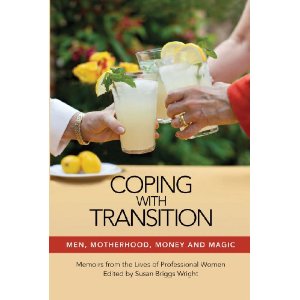
BUY THIS BOOK: Coping With Transition: Men, Motherhood, Money and Magic

Transitions. Everyone goes through them, but even when they lead to something wonderful like marriage to the one you love or the welcomed birth of a child, they can be unsettling. Coping With Transition, Men, Motherhood, Money and Magic, edited by Susan Briggs Wright, is a memorable collection of memoirs from women who were born between 1935 and 1960. It was a pivotal era for women, a time when transitions, especially difficult ones, were seldom discussed. Women’s lives, family life, life in general was supposed to resemble the images Norman Rockwell captured on the pretty and serene covers he did for the Saturday Evening Post. The reality was often far different. Messier. Confusing.

Rules were numerous. Young women were cautioned to adhere to certain standards. “My father was strict about who I could go out with,” relates Suzanne Kerr in her memoir titled, Waiting For Marriage, Sex, and My Mother’s Life (In That Order). Suzanne’s dad went on to tell her as she was leaving the nest for college in September of 1962, that if he ever heard of her going to a boy’s apartment, he’d jerk her out of school. (Can you imagine handing down such a mandate to your daughter today?!) Her mother said she should marry a professional man, and oh yes, she should certainly be a virgin. Suzanne chronicles what becomes a long and circuitous path to the altar in a voice that mixes elements of wry humor and rueful irony.  And honesty. It’s the honesty and trueness of each voice in the collection that makes it such a compelling read.

Why do I not remember days, only moments? How do I start … with the end of my life? So begins Sue Jacobson’s haunting memoir, Why Have I Survived You? in which she tells of the loss of a beloved daughter. Donna Siegel begins her memoir, Crossing the Rubicon, with this notable line: Growing into who you are genetically destined to be can cause a lot of problems. Donna was married at 19 and divorced after a lifetime. Somewhere she found the courage to reenter school, to earn her master’s degree, but even better, she lives comfortably now with life’s questions, its mystery. In A Closet: Memories, Meaning, and Sometimes Magic, Mel Gallagher, confides that her closet (of all curious and imaginative places!) and all that it contains has given her insights into her life. Leslie McManis begins her short essay, Growing Up Outside, with this intriguing line: My mother was a forties beauty queen, and then renders the poignant details of an injured childhood, but the accent is on survivorship, not victimhood. What touches a chord throughout this collection is the amount of courage and resilience that was and is still demonstrated by this remarkable group of women. The collection is diverse, covering topics from a husband’s impending retirement to the pursuit of international adoption—at the age of forty-nine, no less. Talk about courage. And there’s long, intimate and wise talk about seizing love and the moment—at sixty-eight from Mary Margaret Hansen. No, she isn’t thirty-five, but she’s still very full of life with so much to do, to share and contribute as you will find out when you read her witty and smart memoir Seven Scenes From Shared Space.

Coping With Transition, Men, Motherhood, Money and Magic is truly a book for women of all ages, and the men who want to understand them—who dare to try! Reading it is like sitting down to have an intimate chat with dear friends and the conversation is one that leaves you feeling satisfied and hopeful. It’s life affirming. It would be great to see this collection digitized for e-readers. It’s perfect for reading on the go. A perfect delight all the way around.

 

Wednesday, December 7, 2011

Should we kill a killer if he wants to die?


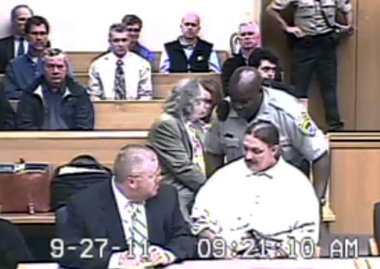
[caption id="attachment_485" align="alignright" width="300" caption="Click the image to hear a judge explain the legal logic for granting Haugen's wish"][/caption]

Last month, Oregon Governor, John Kitzhaber, imposed a moratorium on the death penalty for the remainder of his term, saying he's morally opposed to capital punishment and has long regrettedallowing two men to be executed in the 1990s. Oregon is the fifth state since 2007 to halt the execution process. One of the biggest motivating factors behind this decision is the fear of killing the wrong person. It happens and often the tragedy isn’t uncovered until after the fact. After lives and families are destroyed.

But what about the inmates who ask to die? The death row volunteers who are guilty by their own admission. So guilty there is not so much as the sliver of a shadow of doubt. That’s the case with twice-convicted murderer Gary Haugen. After serving thirty years in prison, the last several on Oregon’s death row, Haugen asked the same legal system that handed down his death sentence to carry it out. A judge agreed, and Haugen’s execution date was scheduled for December 6th.

But it didn’t happen because Oregon’s governor suffered a moral crisis over the issue and shut down the death machine. Until his term is over, he says. Then the next governor can sort out the legislative mess.

Some objectors say volunteering is a way for inmates to control the system. Some say it’s state-assisted suicide. Some would take every death row inmate, including Haugen, “out back” and shoot them. Others think sitting out your days in a prison cell is a worse penalty, a living hell as opposed to the eternal one that may wait after death. But however you look at it, volunteers are in a different category. They aren’t straining the already burdened courts with yet one more appeal beyond asking to die. Now. They aren’t looking for a loophole or pleading they’ve been saved by Jesus Christ, although professionals in the field say, as in the case of Haugen, such petitions are often meant to draw attention to the flaws in the justice system. But even if legal reform were to occur as a result of their actions, volunteers must know they won’t be alive to see it.

So, what’s the real point? In research for my novel, The Volunteer, I read a lot of interviews of these inmates, and while many had strong opinions about the whole emotionally-charged, Gordian Knot that surrounds the death penalty, at their core, what some of them seemed to feel was the need to take responsibility. Short of returning to life those who were dead by their hands, it was all they could do. End the suffering of their victim’s families, and in some cases, of their own families. And isn’t this, at least in part, the logic that underlies the death penalty? That the suffering should come to an end?

So while I can admire Kitzhaber for his courage in standing up for his convictions, and for doing so under a barrage of public criticism, while I even share in his moral confusion about the matter, I think an exception should be made for Haugen, and in the case of all volunteers like him. Let the ones who choose to shoulder the terrible burden of their crimes go. Let it be over. Let Haugen fulfill his court-ordered obligation, the one a judge and jury, showing no less courage than Kitzhaber in making their decision to send Haugen to his death, says he deserves. And let those who are left behind find peace . . . if they can.

Tuesday, November 29, 2011

Organic Farms: What's a goddess got to do with it?


First: The farm and the magical trip that made up the best Thanksgiving Day ever.... 

On Thanksgiving Day I rode with my son, David, and his girlfriend, Christy, to the Hill Country. It was the most special occasion because it was my first visit to land they purchased near Smithwick where in a few short months they will open an aquaponics farm. In case you don’t know, Aquaponics is the cultivation of fish and plants that are linked via a re-circulating ecosystem utilizing natural bacterial processes to convert fish wastes to plant nutrients. It is an environmentally-friendly, organic method of growing food (you harvest both fish and produce) that harnesses the best attributes of aquaculture and hydroponics without the need to discard any water or filtrate or add chemical fertilizers. And unlike crops raised by hydroponics alone, the fruits and veggies grown this way taste wonderful!

[caption id="attachment_500" align="alignright" width="2554" caption="The view from my front yard"][/caption]

I’m excited about this venture and thrilled to be part of it. One of the reasons we went there was so that I could choose a home site. I’m thinking a Texas Tiny Houses type home. I took my camera (my home site picture here doesn’t do it justice) and a small iron bird, a garden ornament, to leave there as a promise, and I brought back a soil sample and rocks with actual crystals in them from what will one day be the garden outside my front door. It was a beautiful day to be outside, to walk the land that had lived in our hearts for so many years like a dream. The air in the hill country has an effervescence, like champagne, and it’s permeated with the fresh scent of cedar. There were butterflies everywhere, the music of birds (the property backs up to a section of the Balcones Canyonlands National Wildlife Reservation) and the hush of the wind through the trees. Not silence, and yet it was silence at some level so deep, a level that waits in each of us, I think, to be recognized, to be nourished. We had lunch. Christy and David had packed my favorite Thanksgiving feast: turkey sandwiches on homemade bread with homemade cranberry sauce and butter. Evening came and we sat in the grass watching the last of the day’s light glaze the hills across the highway. “It’s hard to leave,” I whispered, and it was.

Now for the goddess part....

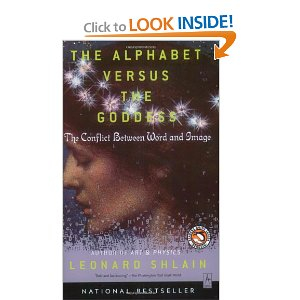
But on the way home, we had an interesting conversation. Christy is training to run in the MetroPCS Dallas White Rock 26.2 mile marathon going off this weekend. She’s been training for weeks and it’s amazing to me; her persistence has been dogged in the extreme. Grueling. I’d never do it and I'm so proud of her because she is! She has said all along, though, that she isn’t doing it to win and I understand her completely. The very fact that she set the goal, that she adhered to a training schedule, that she hasn’t once given up on her commitment has given her a sense of accomplishment. It has raised her level of self-confidence. And that’s enough. She’ll be happy, she says, if she can finish. But David said if he had put in all the sweat equity she has, he’d be set on winning. In fact, he said he wouldn’t take on the challenge of a marathon or anything like that unless he believed to his core he could win. Their discussion seemed to represent one of the classic male/female divides and led me to remember a remarkable book I read quite some time ago, The Alphabet Versus the Goddess, The Conflict Between Word and Image by Leonard Shlain. I mentioned the book to them, and reflecting on it, said I thought the difference in their approach to a challenge was rooted in ancient history when men were the hunters in charge of bringing food back to their tribe and women were the gatherers, the nurturers, charged with the safety and wellbeing of the children, the progeny that ensured the continuance of the race. That is a less well-defined goal, one that spans a much longer time of execution than the one of rustling up the family’s next meal. A guy had to be focused; he had to win and more than that, he had to be passionate about winning. He had to be in a kind of “take no prisoner’s” mode, because it wasn’t as if he could purchase dinner at the local grocery store if he failed! His need to succeed was immediate, the consequences if he didn’t were just as immediate … starvation and death. And while the woman’s role was as crucial to the tribe’s survival, there wasn’t the daily pressure of the hunt with its clearly defined objective. The hunter had to win, every day provide a physical trophy; the goddess didn’t. She provided things, but they were less tangible, nothing to dance in the end zone over! At least that’s my take on it for what it’s worth. Y’all weigh in, if you want to.

And for readers who might be interested

From the Amazon Review: "Literacy has promoted the subjugation of women by men throughout all but the very recent history of the West," writes Leonard Shlain. "Misogyny and patriarchy rise and fall with the fortunes of the alphabetic written word." That's a pretty audacious claim, one that The Alphabet Versus the Goddess provides extensive historical and cultural correlations to support. Shlain's thesis takes readers from the evolutionary steps that distinguish the human brain from that of the primates to the development of the Internet. The very act of learning written language, he argues, exercises the human brain's left hemisphere--the half that handles linear, abstract thought--and enforces its dominance over the right hemisphere, which thinks holistically and visually. If you accept the idea that linear abstraction is a masculine trait, and that holistic visualization is feminine, the rest of the theory falls into place. The flip side is that as visual orientation returns to prominence within society through film, television, and cyberspace, the status of women increases, soon to return to the equilibrium of the earliest human cultures. Shlain wisely presents this view of history as plausible rather than definite, but whether you agree with his wide-ranging speculations or not, he provides readers eager to "understand it all" with much to consider. --Ron Hogan

It took me awhile to get through it, but it was well worth the read, for what I carried away from it was a clearer understanding of human nature and a greater hope for our future.

Wednesday, November 23, 2011

Publishing in the New Wild, Wild West: A Conversation with Editor, Corinna Barsan

I have had the privilege of becoming acquainted with Corinna Barsan, a senior editor at Other Press, through our correspondence regarding a handful of wonderful books published by the house. The first was The Quickening by Michelle Hoover. An Accidental Light by Elizabeth Diamond and Lamb by Bonnie Nadzam are two others. Judging from what her authors have to say about her, Corinna is a truly remarkable, hands-on, nurturing midwife to the books she works on. I think it must be lovely as a writer to have her guidance. I know I have very much enjoyed our email conversation. So when out of the blue, I decided to try indie publishing, I thought of Corinna and wondered what she would think. What would her opinion, even her advice be, to an author heading into this new territory? I kept wondering for so long, I finally decided to ask her and she has graciously consented to share her answers to a few of my questions. Corinna, welcome to the blog. Thank you very much for taking the time to drop by.

Thanks for inviting me, and congratulations on the publication of your new book, The Volunteer. You’re now an indie publishing veteran! You’ll have to share your experiences . . . but we’ll save that for future blog posts.

First, do you own a reading device? Do you take it along when you travel? Are you reading something on it now? Do you find it is a different experience? 

I’m a bit of a walking book-lover cliché. When I’m reading for pleasure, it’s always a printed book. I’m an underliner. I like to fill the pages with dots and lines and markings as trails leading back to my impressions. But for work purposes, I mostly read submissions on a device—as most editors and publishing folks do. In the old days (just five or six years ago), you could spot an editor on the street by the heavy load of manuscripts tucked in a tote and their tilted posture. Electronic devices have saved our backs and spared some trees from copy machines. (Although I have to admit that I still print out submissions when I'm starting to fall for a book because I tend to absorb more of the story that way.) While these devices are convenient in so many ways, one thing that irks me is that the outside world can't distinguish that the reading I'm doing is work-related and that I'm not a total e-reader convert—I still support the printed book. I wish someone would manufacture a sticker that says something like: On duty. I prefer paperbacks. I would slap that on the back of my device!

In a recent conversation I had with a literary agent, she tagged the publishing climate today as the “Wild Wild West”. Do you agree? And if so, do you think the current shaking of the old foundation will settle, and while the landscape around it might be new, do you feel the base it sits on will eventually be stable and accepted as part of the publishing mainstream?

That's a great image. In many ways it is like the “Wild Wild West” in that we're traveling across unchartered terrain and there are no rules ("laws") to guide us—it's a bit of a land grab right now as we feel our way through these changes. In many ways it’s exciting because new opportunities for publishing have opened up and there's room to break out of previous molds to experiment with format. Some books—such as very hot, time-sensitive nonfiction—can benefit from being published as quickly as possible into an e-book so as not to miss out on public interest. We can do that these days. While we're still exploring and experimenting, it all looks like a mad dash of chaos but the possibilities are manifesting and things will eventually calm down a bit when the novelty wears off.

In the past, an author who published his or her own work was often dismissed out of hand. From your viewpoint as an editor, has that perception changed with the advent of e-books and readers? Would you, or have you ever considered the work of an indie author? Is there an indie book out there that you wish you had acquired?

There have been some great examples of writers self-publishing, finding success, and then going on to have a more traditional experience with an established publisher. One title that springs to mind is Anthology of an American Girl by Hilary Thayer Hamann, which was self-published and then re-published by Spiegel and Grau. It’s difficult to ignore a book that has taken flight through word-of-mouth and I would certainly consider a title that has galvanized readers. This all goes back to increased opportunity in this “Wild Wild West” landscape. The arrival of e-books has given self-published authors an advantage in that their work is more accessible; though I think an author needs to be a good self-promoter or have a platform to make inroads.

A lot of rhetoric surrounds the price of indie e-books. Readers argue that traditional publishers price them too high. Some readers even boycott books priced above $2.99. What is your feeling about this? Do you foresee traditional publishers lowering the prices for e-books in the future?

There's great danger in pricing e-books too low because the message that is being delivered is that it's okay to devalue a work of literature. Format doesn't necessarily equate the need for dirt cheap pricing. What you're buying is art. It shouldn't be reduced to the price of a Starbucks coffee because people are out for a bargain. Once you start lowering prices to that extent, it’s much harder to raise it again to a more respectable price since you’ve set an expectation in the consumer’s mind. E-book pricing is still in flux and eventually we’ll settle on a model—hopefully a respectable one.

Corinna Barsan is a senior editor at Other Press, where she edits literary fiction and nonfiction from around the world. She joined the company in 2006 after beginning her publishing career at Farrar, Straus and Giroux. Prior to her editorial work, she was a photo editor for book and magazine projects. Born and raised in New York City, she holds a bachelor’s degree in journalism from New York University and an MFA in fiction from Hunter College. And she writes a wonderful blog, Shiny White Page.

Thursday, November 10, 2011

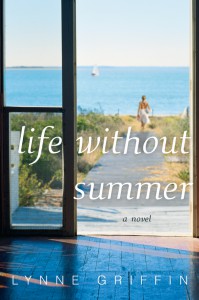
Buy This book: Life Without Summer by Lynne Griffin


I had ideas about the story when I picked up Life Without Summer, Lynne Griffin’s fiction debut, but I was wrong. I thought I knew what was meant by Summer, but I didn’t. I imagine, too, that I’m not the only reader who was hesitant when on reading the jacket copy, I learned the story concerned the loss of a little girl, adorable four-year-old Abby. But there was something so compelling in Griffin’s writing from the very first page: Fall, it begins, day 18 without Abby. This from Abby’s mom, Tessa, who is foundering in a nightmare of grief after a hit and run driver ran Abby down in front of her pre-school. Other seasons of grief follow, winter and spring, while Tessa grapples with the nightmare of horrendous loss and what she deems the near-criminally inept handling of the investigation by the detective who is assigned to Abby’s case. But in a way it’s Tessa’s anger at this man, and her frustration that sustains her. It’s her single-minded focus on bringing the driver to justice that creates the shape of her days.

Ethan, Abby’s daddy, who is struggling in his own way, asks Tessa to see a therapist and she complies although in the beginning she questions what sort of help she can get from Celia who, while she is compassionate in her attention to Tessa, keeps her professional distance. Celia has her own story, one that unfolds alongside Tessa’s and it is in this way that the real complexities of this plot begin to be revealed. Celia’s life too has been filled with tragedy. There’s a half-grown son and his secrets, an ex-husband and his alcoholism. There are other things, hinted at, whispering between the lines. There’s all this nice stuff about a new husband and a new life for Celia and her son. But something feels off about it. This is what is so well done throughout this novel, the feeling it gives of having its own secret. It will be summer before the pages give it up, the answer to the mystery. By then hearts will be broken all over again and then entwined in ways you can’t imagine. For more visit Lynne's website. 

Thursday, November 3, 2011

A cultural leap: an American goes east

I read an article on my homepage and I'm compelled to share. I grew up studying ballet, dancing and dreaming of being a principal, and also composing in the language of the ballet. Called choreography, the language of dance is beautiful in itself and through a crafted series of characters, reveals a story. As a student, I recognized that Russia produced the best dancers; they were known for it. The finest training I ever received was given me by Frank and Irina Pal, two fabulous and passionate dancers from Czechoslovakia who were trained in the grand classical Russian style. I had the good fortune to study with them at their school in Wichita Falls, Texas. The Pals escaped Leipzig after the second world war on the last American truck out of city just as the Russian troops were entering from the other direction. Eventually they wound up in Wichita Falls, bringing their art and passion to a north Texas city where the cultural climate had been described to them as a wasteland, but they were determined, romantic, and devoted to their students, and they had their own share of "Texas/Czech" grit. I have vivid and (almost) fond memories of Frank shouting at me in Russian! In addition to the studio, they also formed a semi-professional ballet company that toured and they, along with their students, performed regularly for many years.

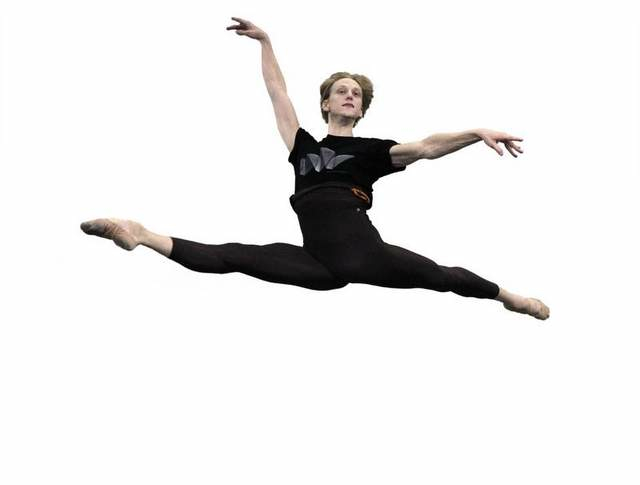
The Pals escaped to America; Rudolf Nureyev and Mikhail Baryshnikov defected. In the history of ballet, it is always the east coming west to find artistic freedom. But now, it is the other way. Now something remarkable is happening and a guy, a kid from North Dakota, David Hallberg of Grand Rapids, South Dakota, has been invited to dance as a principal with The Bolshoi Ballet in Moscow, the first American, the first foreigner ever! His story is remarkable, his courage and perseverance are incredible. And if this photograph is any indication, in movement he captures the essence of something so beautiful and filled with light, I had goosebumps just looking at it. What evidence this gives of how the world has changed, of how it has become smaller and more willing to share. Nothing matters here of cultural differences or ethnic biases. Only beauty matters, a universal language. Bravo, David. I wish I could be there.

Read the full article here and visit David's website here

Tuesday, November 1, 2011

Life with a side dish of lemons: the remedy


So, on Sunday, ten days into my Mac experience, I got the message in fourteen languages to shut down. In IBM speak, it’s like the dreaded blue screen. Had all gone as expected, I would have rebooted and the Mac would have cleared up the issue and zoomed into life, but all did not go as expected. Turns out there’s something haywire with the RAM. I took it for repairs yesterday and on the way home stopped in at the drugstore, came out and the car wouldn’t start. Now it’s in the shop, too. Lemons. Life is handing me lemons. The nerve! I love my Mac; we had bonded, and I love my car; it’s paid for. All that love . . . squeezed now into lemons. Squeezing my dollars! Sitting on the curb, waiting for the mechanic, I wished for a diversion. Something to take my mind off its tendency to worry. I tried calling both sons, but they were each one traveling in separate parts of the country and without cell service. I sat some more and wished for my Kindle.

Reading, it’s the best diversion

No matter what is happening in my life, from a one-lemon tiny trouble to a five-lemon, full-blown disaster, I have always sought refuge in reading. I can read anytime, anyplace, almost anything--the side of a cereal box, a clothing label, a recipe--and, even if it’s only for a moment, I’m transported. My brain and heart rest in the words, the story. Reading is restorative. Words have the power to create imagery, a pseudo-reality that is different from the one you’re standing in and that interlude, however brief, takes you out of yourself, providing a respite. Joan Reeves blogged recently about this, not reading so much, but about Happiness Amidst Life’s Lemons. In fact, I read her post yesterday, after the mechanic jumped my car, followed me to the garage, and then brought me home. (I wish it were just the battery.) But before that, sitting on the curb waiting for rescue, I wished for my Kindle. If I could have read something, it would have stopped my mind from chewing over the lemon rind so to speak, until I had scared myself with every possible scenario up to and including, or nearly, becoming homeless as the result of being served so many lemons. Where will it end? I asked myself. Why me? I said. What next? Can it get worse? (That’s a bad one to ask!)

If only I'd had my Kindle. . . .

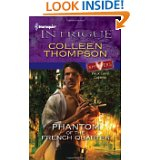
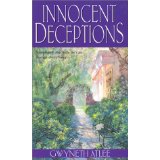
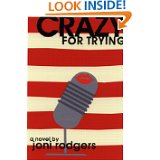
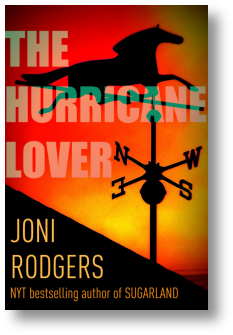
I could have been reading, Jane I’m Still Single Jones, by Joan Reeves, say, a recent download (A romantic dream of a high school class reunion story that zipped along like a fun evening spent with a group of wry and entertaining characters, and cleverly spiced with little nuggets of wisdom that gave me pause. I love Joan’s voice!) Had I been reading that, I might have been smiling.   I know I would have been engaged. Or I could have been reading Innocent Deceptions, a historical novel by Gwyneth Atlee aka ColleenThompson, another recent Kindle download. Reading that would have transported me back to the Civil War era and a story of love and betrayal. (Watch for more of her historical and romantic suspense releases in the near future. Her latest release, Phantom of the French Quarter, is an eerie and atmospheric tale of love and murder). Or I could have taken another look, at Crazy For Trying, by Joni Rodgers. I read that on my Kindle not long ago, loved it and reviewed it here. (Look for her latest release: The Hurricane Lover, a stunner of a literary thriller coming to Kindle this month.)


Instead. . . .

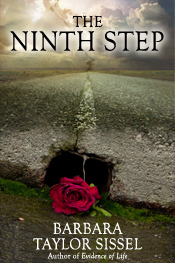
I chewed my virtual nails, pondered all sorts of even graver consequences, indulged in brief acts of self pity, and tried calling my kids so I could serve them a few of my lemons, all of which only increased the sour taste. When I could have been reading. I’m not sure what the lesson is, but I think it goes something like this . . .  don’t leave home without your Kindle (or e-reader of choice) and don’t share your lemons. As Joan suggests, make lemonade. Maybe she’ll even share the recipe she mentions in her post. Oh, and I wouldn’t mind at all if, as a diversion, you were to read my books on your Kindle, too. The Volunteer and The Ninth Step aren’t exactly a laugh a minute, but the stories, the suspense just might hook you in. At the least, you’ll be transported to another world where the lemons aren’t your own.


If this post looks wonky, blame it on the old PC.....