It’s about time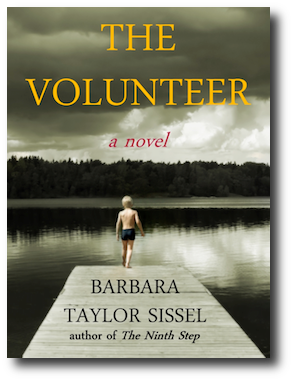 Really. Time is what started the whole story. I read about a man in the newspaper who was sentenced to death and called off his appeals. The court obliged him and set the date of his execution. I tried to imagine it, what it must be like for him to know the date of his own death. Would he mark the day on the calendar with a red X? Would he X off each day before that one? What would his thoughts be, his emotions? It was hard to imagine his fear and yet I was drawn to it. To explore it. Time running out, ticking down to zero. By law, he could reinstate his appeals if he chose to, or his devastated family could talk him out of it. So, as the day draws closer, will he buckle? Some might say, Who cares? Obviously if the guy’s on death row, a convicted murderer, he’s no asset to society. The choice
Still, given that the self-preservation instinct is purportedly the strongest natural instinct a human being has, how desperate does a man have to be to ask to die? Or how remorseful? Or sickened by himself and his acts? According to one source I read, nationally, as many as one in six who are facing execution ask to die. The first was murderer Gary Gilmore, who was put to death via firing squad in Utah in 1977. More recently, the Oklahoma City bomber Tim McVeigh was a volunteer and serial killer Ted Bundy reportedly told police that he purposely committed murders in Florida because the state had the death penalty. Obviously there are few who mourn the passing of these men. Their families perhaps.
The falloutAnd what about the family? Suppose you’re related to someone on death row who’s made such a decision? That big red X marks your calendar too. What if you’re his kid or his wife? Or his mother? The questions seemed enormous to me. Research for
The Volunteer led me in several directions. There’s the ongoing argument that surrounds the death penalty in general, but more specific with regard to volunteers, there is the issue of whether the inmate is using the system to commit suicide versus the other cold-reality contention that calling an early end to the often years-long appeals process saves money. Statistics I read indicate that confining an inmate to death row is a great deal more expensive because of the heavy cost of the appeals. But appeals aside, according to sources I found, it costs Texas an average of $16,000 to house one inmate for one year. In California, the cost rises to a whopping $90,000 per year per inmate.
The more intimate focusThe story
The Volunteer tells, though, is one of family. As parents, in general, we raise our children to be good people. We want them to be happy, but then they grow up, become adults. Whatever authority or control or means we had to keep them safe ultimately slips from our hands. In the blink of an eye, a choice is made, and they are plunged into circumstances that are not just life altering but life threatening. Hearts are broken; freedom is lost. How much of this is the fault of parenting? Of mothering? In this case an inmate might well be put to death for his mistake, but what sentence does a mother receive?
The Volunteer tells a story about mothers and their children, guilty and innocent. It tells of the crimes that go unpunished. It tells how a terrible act done in one generation might not bear its evil fruit for several. It’s about collateral damage and extenuating circumstances. And it’s about the resilience of life and the human spirit. I think about that a lot, life’s resilience… every time I see a flower sprouting through cracked pavement, it reminds me how tenaciously life holds to itself.