Showing posts with label The Volunteer. Show all posts

Thursday, February 16, 2012

Hush, don't tell.


Emily was at home when Shannon came over to confess she was pregnant. The girls were best friends, barely 17, and had just started their senior year of high school. Shannon was a class beauty. She was a homecoming queen nominee. But it was the Sixties; nice girls—class beauties, homecoming queens—didn’t get pregnant.
There had to be some way to take care of the problem. The girls drove the dusty back roads to the smaller towns around the metropolitan area where they lived naively assuming they could find a doctor who would rid Shannon of her difficulty. All declined. Back at Emily’s, Shannon lay down alongside Emily’s bed. Her plan was for Emily to jump from the bed onto her abdomen. The mistake would then be expelled and Shannon could return to being the carefree teenager she was before having unprotected sex with a guy who supposedly was in love with her but, after all, didn’t care. Emily refused. Shannon’s class beauty picture was removed from the high school annual. Shannon herself was expelled and forced to leave home. Frightened and alone, she gave birth in a strange place under the cold, judging eye of relatives who disapproved.
Katherine had a roommate who came to be in a similar situation. Donna managed to hide her condition from her employers until two weeks prior to her delivery date. The only doctor she saw during the term of her pregnancy was the one who confirmed her condition. Again, the father of the child, who had professed love, didn’t. Donna took a leave of absence from work; she gave birth to her baby in a home for unwed mothers. Denied the right to even see the child, she gave it up for adoption. She returned to work. Donna and Katherine never spoke of it, but the silence and the sorrow weighed on them and eventually eroded their friendship.

Vicky’s roommate Tanya also hid her condition. Only Vicky knew. Tanya carried her baby to term. The girls, twenty-somethings, had no plan other than Vicky would drive Tanya to the hospital when her time came; she would deliver her baby and then decide whether to keep it or give it up. Other than that, the matter wasn’t discussed. It was as if by ignoring the fact, it might disappear. It didn’t. When Tanya’s water broke, she found Vicky across the hall watching television with her boyfriend. The boyfriend drove the girls to the hospital, but after that, he never spoke to Vicky again. The fact that Vicky associated with, lived with a girl who was pregnant out of wedlock tarred her with the same brush, and in his eyes, the “sin” was unforgivable. Tanya’s baby was stillborn. The hospital staff insisted she give it a proper funeral or the baby’s soul would be lost in purgatory and when she refused, they shamed her.


These stories are true. Only the names and certain facts have been changed to protect privacy.

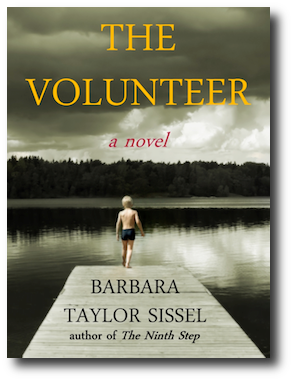
I ran across these accounts while doing research for The Volunteer after my character Sophia got herself into this same predicament at age 16. Her mother turned her back and what happens as a result, while realistic, is terrible, even horrifying. Because regardless of our beliefs on the issues of premarital sex and pregnancy, silence is not the answer. Neither is judgment against or consignment to hell. That was life before birth control. I don’t think we want to go back to that. To the lies and the secrecy, the labeling unfit, the name-calling. But the stigma continues to exist. To some degree, girls are still shunned when compassion is called for; they and the services that are in place to guide them are consigned to hell by religions that claim love and human kindness are their foundation and with devastating consequences. In The Volunteer, the consequences for Sophia span a lifetime and the truth, when it is finally exposed, will shock her to her core.

Posting a link today (3/14/12) to yet more foolishness regarding this issue: An article in the e-zine Jezebel that reports Arizona's latest bid to ban contraception as a method of birth control. It would be laughable if this same attitude hadn't had such tragic consequences in the past.

Wednesday, January 18, 2012

Read, Don't Wear Your (Kindle Nation Daily) Shorts!


Kindle Nation Daily, (website link), the brainchild of Stephen Windwalker, Windwalker Media, is a webzine/newsletter about all things Kindle, and so much more, offering readers free book alerts, cogent indie-related articles and Kindle news, plus tips and tricks for getting the most out of your Kindle experience. It is no accident that it is the most popular Kindle community on the web. In addition to their Facebook page, which daily showcases a plethora of e-books for all tastes--from thrillers to romance to literary and historical, just every genre you can imagine--and all budgets, the webzine also sends out daily email blasts called Kindle Shorts. Not the kind you wear but the kind you read! In addition to an author biography and bits of other data, each short contains a generous excerpted serving of the book, usually the opening chapters, enough certainly to decide whether the work is to your taste. For readers it’s a great way to discover new authors without spending a dime. And today the featured short is an excerpt from my novel, The Volunteer.

Briefly, the story centers on psychologist Sophia Wilmot who through a haunting sequence of events finds herself holding the power to save death row inmate Jarrett Capshaw from execution. Sophia resists becoming involved, and wouldn’t have, if it were not for Jarrett’s wife and children. It’s his family and their struggle to survive, to come to terms with this calamity, that she can’t resist. But families are what The Volunteer is about, how they’re made and how in one single, horrifying instant, they can be broken. It is a story about mothers and the lies they tell to protect their children, to keep them from being hurt. But what happens when the truth comes out anyway and nothing and no one is spared? Sometimes the truth has the power to break your heart, and in Sophia’s case it will also endanger her freedom and threaten everything she has ever believed about her life.

I hope you will be intrigued by this short enough to check out and subscribe to the Kindle Nation Daily so you can sign up to receive the Shorts via email for yourself. I guarantee you will find authors and genres you love. And do visit their Facebook page, as well, to discover even more great new books every day. As an author myself I can’t say enough good about the variety of ways there are through this outlet to promote e-books. For me, the marketing end of this venture has been the most daunting and confusing. I didn’t even know where to start and when I found the Kindle Nation Daily website, I was thrilled. There it was, a variety of marketing plans laid out in a straightforward, creative and professional manner that from experience I know delivers fantastic, track-able results. Marketing a book, or any product, I think, is a cumulative adventure. It builds from each effort and having a plan is key. Having Steve’s support and the choice of the many venues he provides has been invaluable to me. Other authors agree. Read what they have to say here. All I can do is add my thanks and appreciation to theirs.


Wednesday, December 7, 2011

Should we kill a killer if he wants to die?


[caption id="attachment_485" align="alignright" width="300" caption="Click the image to hear a judge explain the legal logic for granting Haugen's wish"][/caption]

Last month, Oregon Governor, John Kitzhaber, imposed a moratorium on the death penalty for the remainder of his term, saying he's morally opposed to capital punishment and has long regrettedallowing two men to be executed in the 1990s. Oregon is the fifth state since 2007 to halt the execution process. One of the biggest motivating factors behind this decision is the fear of killing the wrong person. It happens and often the tragedy isn’t uncovered until after the fact. After lives and families are destroyed.

But what about the inmates who ask to die? The death row volunteers who are guilty by their own admission. So guilty there is not so much as the sliver of a shadow of doubt. That’s the case with twice-convicted murderer Gary Haugen. After serving thirty years in prison, the last several on Oregon’s death row, Haugen asked the same legal system that handed down his death sentence to carry it out. A judge agreed, and Haugen’s execution date was scheduled for December 6th.

But it didn’t happen because Oregon’s governor suffered a moral crisis over the issue and shut down the death machine. Until his term is over, he says. Then the next governor can sort out the legislative mess.

Some objectors say volunteering is a way for inmates to control the system. Some say it’s state-assisted suicide. Some would take every death row inmate, including Haugen, “out back” and shoot them. Others think sitting out your days in a prison cell is a worse penalty, a living hell as opposed to the eternal one that may wait after death. But however you look at it, volunteers are in a different category. They aren’t straining the already burdened courts with yet one more appeal beyond asking to die. Now. They aren’t looking for a loophole or pleading they’ve been saved by Jesus Christ, although professionals in the field say, as in the case of Haugen, such petitions are often meant to draw attention to the flaws in the justice system. But even if legal reform were to occur as a result of their actions, volunteers must know they won’t be alive to see it.

So, what’s the real point? In research for my novel, The Volunteer, I read a lot of interviews of these inmates, and while many had strong opinions about the whole emotionally-charged, Gordian Knot that surrounds the death penalty, at their core, what some of them seemed to feel was the need to take responsibility. Short of returning to life those who were dead by their hands, it was all they could do. End the suffering of their victim’s families, and in some cases, of their own families. And isn’t this, at least in part, the logic that underlies the death penalty? That the suffering should come to an end?

So while I can admire Kitzhaber for his courage in standing up for his convictions, and for doing so under a barrage of public criticism, while I even share in his moral confusion about the matter, I think an exception should be made for Haugen, and in the case of all volunteers like him. Let the ones who choose to shoulder the terrible burden of their crimes go. Let it be over. Let Haugen fulfill his court-ordered obligation, the one a judge and jury, showing no less courage than Kitzhaber in making their decision to send Haugen to his death, says he deserves. And let those who are left behind find peace . . . if they can.

Tuesday, October 25, 2011

The Volunteer: It's not about what you might think


It’s about time

Really. Time is what started the whole story. I read about a man in the newspaper who was sentenced to death and called off his appeals. The court obliged him and set the date of his execution. I tried to imagine it, what it must be like for him to know the date of his own death. Would he mark the day on the calendar with a red X? Would he X off each day before that one? What would his thoughts be, his emotions? It was hard to imagine his fear and yet I was drawn to it. To explore it. Time running out, ticking down to zero. By law, he could reinstate his appeals if he chose to, or his devastated family could talk him out of it. So, as the day draws closer, will he buckle? Some might say, Who cares? Obviously if the guy’s on death row, a convicted murderer, he’s no asset to society. 

The choice

Still, given that the self-preservation instinct is purportedly the strongest natural instinct a human being has, how desperate does a man have to be to ask to die? Or how remorseful? Or sickened by himself and his acts? According to one source I read, nationally, as many as one in six who are facing execution ask to die. The first was murderer Gary Gilmore, who was put to death via firing squad in Utah in 1977. More recently, the Oklahoma City bomber Tim McVeigh was a volunteer and serial killer Ted Bundy reportedly told police that he purposely committed murders in Florida because the state had the death penalty. Obviously there are few who mourn the passing of these men. Their families perhaps.


The fallout

And what about the family? Suppose you’re related to someone on death row who’s made such a decision? That big red X marks your calendar too. What if you’re his kid or his wife? Or his mother? The questions seemed enormous to me. Research for The Volunteer led me in several directions. There’s the ongoing argument that surrounds the death penalty in general, but more specific with regard to volunteers, there is the issue of whether the inmate is using the system to commit suicide versus the other cold-reality contention that calling an early end to the often years-long appeals process saves money. Statistics I read indicate that confining an inmate to death row is a great deal more expensive because of the heavy cost of the appeals. But appeals aside, according to sources I found, it costs Texas an average of $16,000 to house one inmate for one year. In California, the cost rises to a whopping $90,000 per year per inmate.

The more intimate focus

The story The Volunteer tells, though, is one of family. As parents, in general, we raise our children to be good people. We want them to be happy, but then they grow up, become adults. Whatever authority or control or means we had to keep them safe ultimately slips from our hands. In the blink of an eye, a choice is made, and they are plunged into circumstances that are not just life altering but life threatening.  Hearts are broken; freedom is lost. How much of this is the fault of parenting? Of mothering? In this case an inmate might well be put to death for his mistake, but what sentence does a mother receive?

The Volunteer tells a story about mothers and their children, guilty and innocent. It tells of the crimes that go unpunished. It tells how a terrible act done in one generation might not bear its evil fruit for several. It’s about collateral damage and extenuating circumstances. And it’s about the resilience of life and the human spirit. I think about that a lot, life’s resilience… every time I see a flower sprouting through cracked pavement, it reminds me how tenaciously life holds to itself.